Chase Freedom Flex Review: Is It Worth It?
The Chase Freedom Flex is one of the most rewarding no-annual-fee credit cards available, if you are willing to put in a little effort.
Unlike flat-rate cards, the Freedom Flex earns elevated rewards through rotating 5% bonus categories that change each quarter.
That means higher upside, but also more responsibility.
For the right person, this card can be incredibly powerful. For others, it may feel like unnecessary work.
Here is a full breakdown of how the Chase Freedom Flex works, who it is best for, and how it fits into a broader Chase Ultimate Rewards strategy for family travel.
This post may contain affiliate links. If you apply through these links I may earn a commission at no additional cost to you.
Or see all my recommended cards: Best Credit Card Offers Page

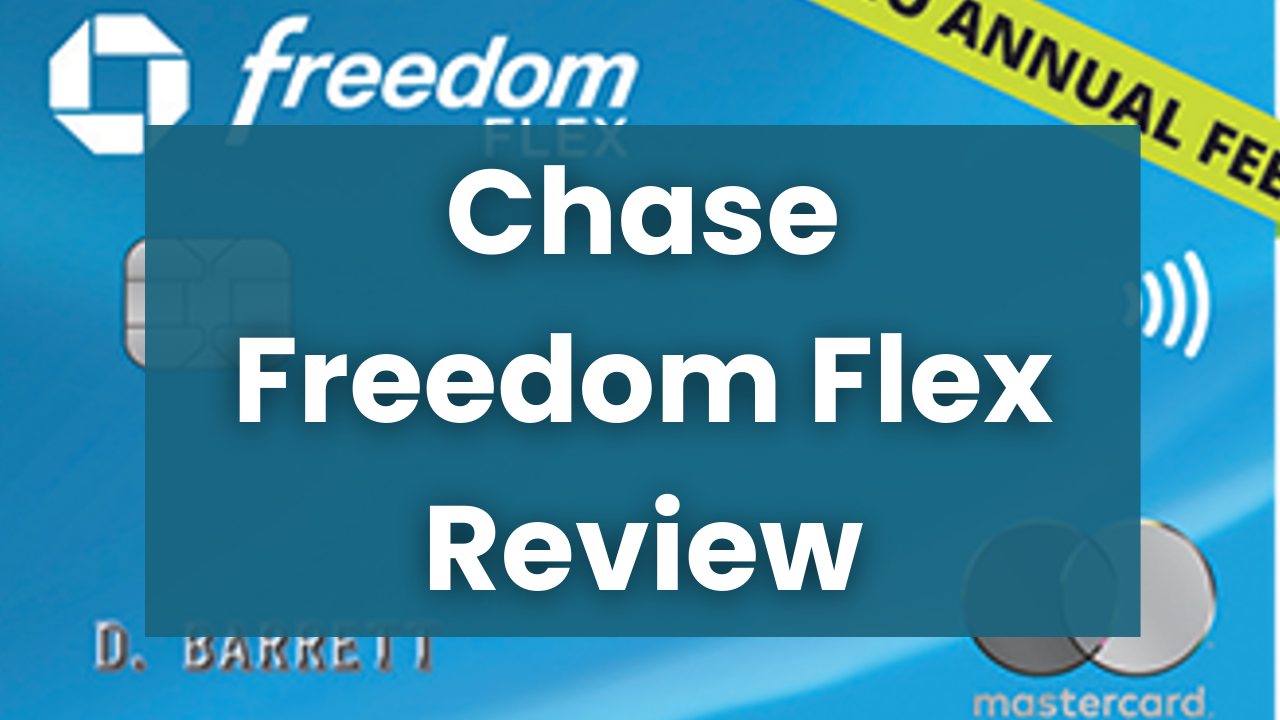
Chase Freedom Flex at a Glance
Annual fee: $0
Rewards currency: Chase Ultimate Rewards points
Card type: No annual fee, rotating bonus categories
Best for: People willing to activate and track quarterly categories
Not ideal for: Anyone who wants a set it and forget it card
Foreign transaction fee: None as of September 20, 2026
Card Network: Mastercard World Elite
Welcome Offer
The current standard welcome offer on the Chase Freedom Flex is $200, or 20,000 Ultimate Rewards points, after spending $500 on purchases in the first 3 months from account opening.
Like the Freedom Unlimited, Chase occasionally runs elevated limited time offers on this card, so it is worth checking the current offer before applying. The spending requirement is low enough that most households hit it naturally in the first month.
0% Intro APR: A Useful Bonus
The Chase Freedom Flex includes 0% introductory APR on purchases and balance transfers for the first 15 months from account opening. After that, a variable APR applies.
For families who need to make a larger purchase and want time to pay it off without interest, this can be a genuinely useful feature. It is likely best to use this intentionally rather than as a long-term financing strategy.
Chase Freedom Flex Bonus Categories and Earning Rates
The Freedom Flex has one of the most layered earning structures among no-fee cards. Here is a full breakdown of every Chase Freedom Flex bonus category and how many points per dollar you can earn:
5% cash back on up to $1,500 in combined purchases in quarterly rotating bonus categories (Activation required each quarter, then 1% after the cap)
5% cash back on travel booked through Chase Travel
3% cash back on dining including takeout and delivery
3% cash back at drugstores and pharmacies
2% back on qualifying Lyft rides through September 30, 2027
1% cash back on all other purchases
All rewards are earned as Chase Ultimate Rewards points, which can be redeemed for cash back, or combined with other Chase cards for significantly higher travel value. So 5% in cash back will actually be earned as 5x Chase Ultimate Rewards points.
For families, the dining category at 3% is very useful. That means that very restaurant meal, takeout order, and food delivery earns a meaningful amount of points.
And the rotating 5% categories frequently include groceries, Amazon, and gas, which are among the biggest household spending categories for most families with young kids.
The Rotating 5% Categories: How They Actually Work
This is the most important feature of the Freedom Flex and the part that trips people up.
Each quarter, Chase releases a set of bonus categories. To earn 5%, or 5x points, you must activate the categories each quarter. This is easy to do through the Chase mobile app in just a few taps. After you activate the offer, you will earn 5% on up to $1,500 in combined spending per quarter. Once you hit the spending cap, then any additional spend in that category will earn 1% cash back.
If you forget to activate the spending bonus, then you earn only 1%. The good news is that activation is retroactive for the quarter, as long as you activate by the deadline, which is usually the 14th day of the last month of the quarter.
So even if you activate in June, you will earn 5% back on eligible purchases made back in April and May for that quarter.
2026 categories so far:
Q1 January through March:
Norwegian Cruise Line
Dining
American Heart Association
Q2 April through June:
Amazon and Whole Foods Market
Chase Travel
Feeding America
Q3 July through September:
Gas stations and EV charging
Public transit
Select live entertainment
United Way
As you can see, some of these are very niche and specific, like Norwegian Cruise line, and others are more broad, like dining.
For families, the Amazon and Whole Foods category in Q2 is especially powerful. Every Amazon order, including Amazon Fresh, Amazon Prime subscriptions, and Whole Foods purchases, earns 5% up to the $1,500 cap.
If you max out the $1,500 quarterly cap every quarter, then you will be earning 30,000 Ultimate Rewards points per year. This is worth at least $450 or more in travel value, just from rotating categories alone.

New to points and miles? Grab a copy of my free beginner’s guide!
Important 2026 Benefit Changes
Two significant changes took effect on September 20, 2026:
Cell phone protection removed: The Chase Freedom Flex no longer offers cell phone protection as of September 20, 2026. Previously the card covered theft and damage up to $800 per claim when you paid your monthly phone bill with the card. If you were relying on this benefit, then you’ll have to find an alternative.
Foreign transaction fees eliminated: Starting September 20, 2026, the Freedom Flex no longer charges foreign transaction fees. This makes it a more practical card to use internationally than it previously was, which is a meaningful upgrade for traveling families.
DoorDash DashPass
The Chase Freedom Flex includes 6 months of complimentary DashPass membership, giving you zero delivery fees and reduced service fees on eligible DoorDash and Caviar orders. Offer must be activated by December 31, 2027.
Additionally, DashPass members get up to $10 off quarterly on non-restaurant DoorDash orders through Dec 31, 2027.
After the 6 free months of DashPass end, then it is important to know that DashPass automatically rolls into a paid monthly subscription at the current rate. I suggest that you set a calendar reminder before your 6 months are up, so that you can decide whether to continue paying, or cancel.
Read More: Chase Sapphire Preferred Review
Read More: Chase Sapphire Reserve Review
Cash Back vs Ultimate Rewards: Why This Card Scales
The Chase Freedom Flex earns Chase Ultimate Rewards points, even though Chase markets it as a cash back card. What changes is how you are allowed to redeem them, based on which other Chase cards you hold in your wallet.
If you only have the Chase Freedom Flex, then you can redeem your points for cash back at 1 cent per point. That’s fine, but it’s not where the real value is.
If you also hold a Chase Sapphire Preferred, Chase Sapphire Reserve, Chase Reserve for Business, or a Chase Ink Business Preferred, then you can combine all your points, including everything earned on the Freedom Flex, and transfer them to airline and hotel partners at a 1:1 ratio.
This unlocks business class flights, free Hyatt hotel nights, and real family travel for nearly free.
This is why many people add the Freedom Flex to their wallet after establishing a Chase ecosystem. The 5x categories become a powerful point-generating machine that feeds into your premium card transfer strategy.
How to Transfer Chase Ultimate Rewards Points to Travel Partners
Chase Travel Portal vs Transfer Partners — Which Is Better for Family Travel?
How to Redeem Points and Miles for Maximum Value
The Chase Trifecta: Where the Freedom Flex Becomes Truly Powerful
The Freedom Flex is most powerful as part of the Chase Trifecta.
Earns 5% on rotating quarterly categories like groceries, Amazon, gas, and dining. The high-upside specialist.
Earns 3% on dining and drugstores and 1.5% on everything else. This is a great catch-all card that offers >1% back on otherwise un-bonused spend.
Chase Sapphire Preferred or Reserve
These cards unlock transfer partners for all points earned across all three cards. They are the key that makes the whole system work.
Together, these three cards cover almost every spending category at a meaningful earning rate, with no annual fee on two out of the three.
For families spending on groceries, Amazon, dining, gas, and everyday household expenses, the Chase trifecta can generate 75,000 to 100,000 transferable points per year. This is a meaningful amount of points and enough for a good family trip paid almost entirely with points.
How the Freedom Flex Compares
Chase Freedom Flex vs Chase Freedom Unlimited
These two cards share the same $0 annual fee, 5% on Chase Travel, and 3% on dining and drugstores. The core difference:
Freedom Flex: Earns 5% on rotating quarterly categories with activation required and a $1500 quarterly cap, plus 1% on everything else.
Freedom Unlimited: Earns 1.5% on all non-bonus purchases with no category tracking required.
Choose the Freedom Flex if: You are willing to track and activate categories for higher upside.
Choose the Freedom Unlimited if: You want simplicity. Many families carry both cards to cover every category at a meaningful earn rate.
Benefits and Protections
The Freedom Flex includes a solid set of protections for a no-annual-fee card. Note that as of September 20, 2026, cell phone protection has been removed from this card’s benefits.
Purchase protection against damage or theft on eligible new purchases
Extended warranty coverage on eligible items
Trip cancellation and interruption insurance up to $1,500 per person
Secondary auto rental collision damage waiver
Access to select Mastercard World Elite benefits
Using the Freedom Flex in Real Life
The Freedom Flex works best as a supplement to your other Chase cards, rather than just being the only card in your wallet.
It shines when:
A quarterly category lines up with a big expense
When you are intentionally timing purchases to maximize the cap
And when you are comfortable rotating which card you use.
It is less effective when:
You forget quarterly activations
When your spending does not match the categories
Or when you want only one card for everything.
For many families, this card is used strategically. Use the card to max out the 5x categories when you can. The rest of the time, use the Freedom Unlimited, or another 2x card, to handle the catch-all spending.
Who the Chase Freedom Flex Is Best For
This card is a great fit if you are comfortable tracking rotating categories, want higher upside from a no-fee card, already use or plan to use Chase Ultimate Rewards, and do not mind occasional category management.
For families specifically, the rotating categories frequently include groceries, Amazon, and gas, which are the categories where most households spend the most.
When these categories appear, the Freedom Flex becomes an extraordinarily powerful card for a family's everyday spending.
It works especially well as a second or third Chase card alongside the Freedom Unlimited and Sapphire Preferred or Sapphire Reserve.
Who Might Want a Different Card
You may want to skip the Freedom Flex if you prefer simplicity over optimization, forget quarterly activations, or want one card for all purchases.
In those cases, the Chase Freedom Unlimited is a better fit. It has simpler earning, the same points ecosystem, and no category tracking required.
Read More: Chase Freedom Unlimited Review
Chase Application Rules to Know
Chase 5/24 Rule
Chase generally does not approve applicants who have opened five or more personal credit cards across all issuers in the past 24 months.
Know your 5/24 status before applying.
Read More: What Is Chase's 5/24 Rule? — Full Explanation
Welcome Bonus Eligibility
Chase limits welcome bonuses on Freedom cards. If you have previously received a welcome bonus on the Chase Freedom Flex within the last 24 months, or if you currently hold the card, then you may not be eligible to receive another bonus at this time.
Final Verdict: Is the Chase Freedom Flex Worth It?
The Chase Freedom Flex offers some of the highest earning potential available on a no-annual-fee card, but only if you engage with it and make a point to maximize it.
For families who spend heavily on Amazon, groceries, gas, and dining, then the rotating categories can generate an impressive number of points on spending you are already doing.
Add in trip cancellation insurance, purchase protection, and no foreign transaction fees as of September 2026.
When this card is intentionally as part of a Chase Trifecta, the Freedom Flex is a powerful tool that meaningfully boosts the points you can put toward family travel.
Next Steps
If you are building a Chase points strategy these resources may help:
Best Credit Card Offers Page — see current welcome bonuses across all cards
How to Transfer Chase Ultimate Rewards Points to Travel Partners
Chase Travel Portal vs Transfer Partners — Which Is Better for Family Travel?